

Best Quality Women Clothing Brands 2026: 7 Picks
Table of Contents
- What Makes a Women's Clothing Brand High Quality in 2026
- How to Tell If Clothing Is Good Quality: 6 Checks Before You Buy
- 1. Peach and Pantry: Best Overall for Curated Quality and Inclusive Sizing
- 2. Peach and Pantry Tops Under $15: Best Affordable Women's Clothing Brands Entry Point
- 3. Women's Clothing Brands With Inclusive Sizing: How Peach and Pantry Measures Up
- 4. Quality by Category: Knitwear, Tops, and Everyday Basics
- 5. Cost Per Wear: The Math That Separates Real Value From Cheap
- Frequently Asked Questions
Last Updated: October 18, 2026
What Makes a Women's Clothing Brand High Quality in 2026
Quality women clothing starts with what you can verify, not what the label promises.
Most shoppers judge quality by feel alone. That is the first mistake.
The Federal Trade Commission's textile labeling rules require brands to disclose fiber content and country of origin, which gives you a factual starting point before you ever touch the fabric.
Below, we show you exactly how to read a garment like a buyer would, then rank the brands that pass.
How to Tell If Clothing Is Good Quality: 6 Checks Before You Buy
High-quality clothing passes six checks: honest fiber content, clean seams, even hems, sturdy closures, consistent fit, and care instructions that match the fabric. Run these checks before you buy, and you will return far fewer orders.
Read the Fiber Content, Not the Marketing Copy
Natural fibers like cotton, rayon, and modal breathe and drape better than pure polyester. A 60% cotton, 35% polyester, 5% spandex blend, like the one in our Ruching Shoulder Ribbed Top, holds shape without feeling stiff. Check the tag first. If the copy says "luxury feel" but the label says 100% polyester, believe the label.

Inspect Seams, Hems, and Closures
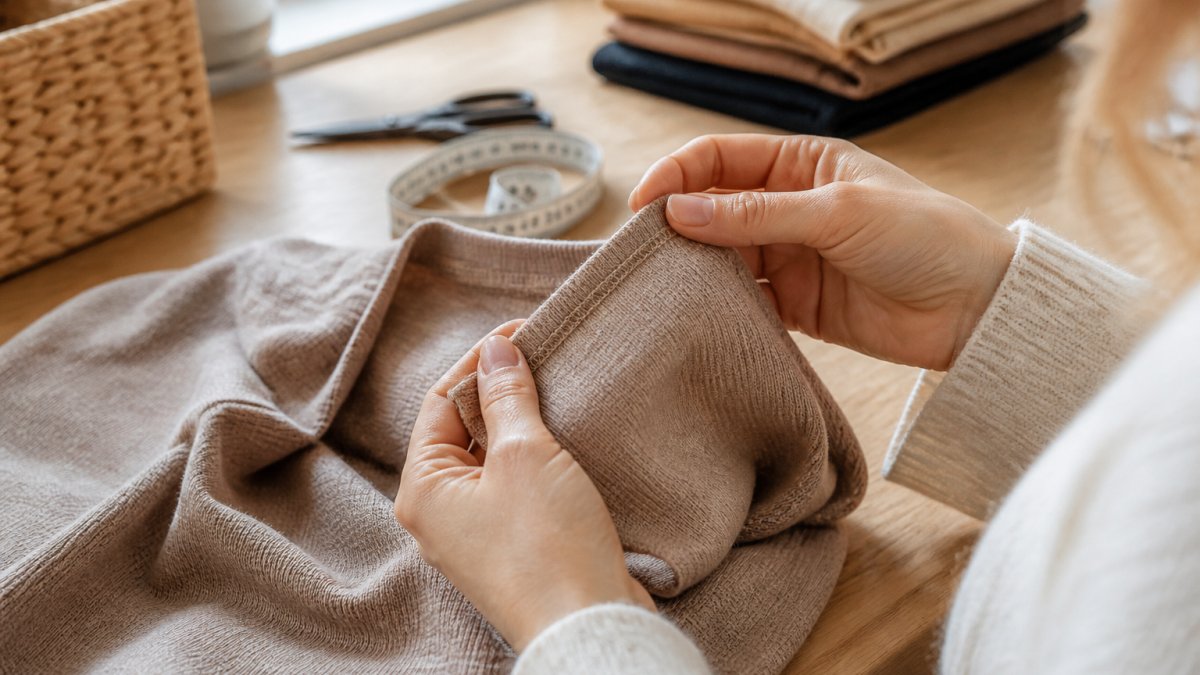
Turn the garment inside out. Look for tight, even stitching with no loose threads. Hems should lie flat, and zippers should glide without catching. These small details predict how a piece survives twenty washes.
1. Peach and Pantry: Best Overall for Curated Quality and Inclusive Sizing
Our top pick is Peach and Pantry, a women-owned lifestyle boutique that curates trend-forward apparel in sizes S through plus. Prices stay accessible, and free shipping applies storewide, excluding houseplants and accessories. The Sleek & Chic Fall Long Sleeve Slitted Top at $10.99 shows the approach: a 96% rayon, 4% spandex blend, made in the USA, with a slit detail that reads far more expensive than the price.

2. Peach and Pantry Tops Under $15: Best Affordable Women's Clothing Brands Entry Point
If you want to test quality without a big spend, start with tops under $15. That is the entry point for the best affordable women's clothing brands, and Peach and Pantry sits right in it.
Where the Value Actually Comes From
Low prices usually mean thin fabric. Here, the savings come from small-batch curation, not from cutting materials. Our Ruching Shoulder Ribbed Top runs $8.99 in a 60% cotton blend, and the Ribbed Bardot Zip Up Long Sleeve is $11.99 in a viscose, polyester, and nylon mix that stretches and recovers.

| Top | Price | Fiber Blend | Best For |
|---|---|---|---|
| Ruching Shoulder Ribbed Top | $8.99 | 60% cotton, 35% polyester, 5% spandex | Layering, everyday wear |
| Sleek & Chic Slitted Top | $10.99 | 96% rayon, 4% spandex | Dressed-up fall outfits |
| Ribbed Bardot Zip Up | $11.99 | 52% viscose, 30% polyester, 18% nylon | Evening and casual looks |
| Draped Ruffle Longsleeve Top | $13.99 | 65% rayon, 30% polyester, 5% spandex | Semi-formal occasions |
| Mixed Knit Turtleneck | $14.99 | 67% polyester, 29% rayon, 4% spandex | Winter warmth |
3. Women's Clothing Brands With Inclusive Sizing: How Peach and Pantry Measures Up
Inclusive sizing means a brand carries your size in the styles you actually want, not just in a clearance corner. The best women's clothing brands with inclusive sizing publish detailed size charts and restock plus sizes as often as straight sizes.
Peach and Pantry offers sizes from S through plus across its apparel, with a size chart on every product page. Our advice: measure yourself once, write the numbers down, and compare them to the chart before ordering.
4. Quality by Category: Knitwear, Tops, and Everyday Basics
Quality is not one standard. It changes by garment category, and smart shoppers judge each one differently. Most ranking lists recommend brands without showing a repeatable way to compare a $12 top against a $120 one.
Use the same four-part test across every category: fiber content on the label, stitch density at the seams, shape recovery after stretching, and care instructions that match the fiber.
Knitwear: Judge Recovery and Rib Tightness
Knitwear fails in one of two ways: it sags at the elbows and seat, or it pills across the chest. Both are predictable before you buy.
- Stretch test: Pull a sleeve cuff or hem sideways and release. A good rib snaps back within one to two seconds. Fabric that stays stretched will bag after a few wears.
- Rib tightness: Hold the fabric up to a window. Dense, tight ribs block more light than loose, open knits and hold shape longer.
- Fiber check: Wool, cotton, and viscose blends recover better than 100% polyester, which tends to hold odor and pill. A small spandex content (3-5%) helps structure without stiffness.
Our Mixed Knit Turtleneck Top at $14.99 blends polyester, rayon, and spandex for warmth that holds its structure, a fair entry point if you run the stretch test before committing.
Sleek & Chic Fall Long Sleeve Slitted Top →
Tops: Check Seam Finish and Drape
Tops are where cheap construction shows fastest, because the seams sit against skin and move all day.
- Seam finish: Turn the top inside out. Look for a serged or bound seam with no loose threads. A raw, single-stitched seam will fray within a handful of washes.
- Drape: Hold the shoulder and let the body fall. Rayon and modal drape softly; stiff polyester stands away from the body.
- Hem evenness: Lay the top flat. A hem that waves or twists will not lie straight after washing.
The Draped Ruffle Longsleeve Top at $13.99 is made in the USA in a soft rayon blend, check the ruffle attachment seam, which is the first place a draped top fails.
Everyday Basics: Prioritize Fabric Weight and Wash Durability
Basics live in the wash cycle, so durability matters more than drape or trend.
- Fabric weight: Heavier jersey resists thinning and transparency better than light, clingy knits.
- Shrinkage: Cotton basics that are not pre-shrunk can lose a full size in a hot wash. Check the care tag for "pre-shrunk" or wash cold.
- Colorfastness: Rub a damp white cloth on an inside seam. Dye that transfers heavily will bleed onto other clothes.
Denim and Workwear: The Two Categories Most Lists Skip
Denim and workwear are where quality differences are largest and where most brand lists stop at the logo.
- Denim: Look for chain-stitched hems, bar-tacked stress points at pockets, and a denim weight of 10-14 oz.
- Workwear: Check reinforced knees, double-stitched seams, and metal (not plastic) zippers.
How to Compare Across Categories
A $14.99 knit and a $90 pair of jeans are not competing on the same standard. Compare within category, then compare cost per wear across categories (see the next section).
The American Cleaning Institute's fabric care guidance notes that matching wash temperature to fiber type is the simplest way to extend a garment's life. Follow the care tag and a good top lasts years, not months.
5. Cost Per Wear: The Math That Separates Real Value From Cheap
Cost per wear is the price divided by the number of times you wear a piece. A $12 top worn thirty times costs forty cents per wear. A $60 top worn twice costs thirty dollars per wear.
Most brand lists stop at the formula. The useful version adds expected lifespan by category, so you can compare a fast-fashion basic against a premium one on the same footing.
Expected Lifespan by Category
| Category | Typical wears (with care) | What shortens life |
|---|---|---|
| Basic tee | 40-60 wears | Hot washes, dryer heat, thin jersey |
| Knit sweater | 60-100 wears | Pilling, sagging rib, hanging storage |
| Denim jeans | 150-250 wears | Over-washing, high stretch content |
| Workwear jacket | 200+ wears | Abrasion at cuffs and elbows |
| Occasion top | 10-20 wears | Dry-clean chemicals, delicate seams |
Run the Math Across Price Tiers
Take a basic tee as the example. A $10 tee worn 20 times costs 50 cents per wear. A $30 tee worn 60 times costs 50 cents per wear, the same value. A $90 designer tee worn 60 times costs $1.50 per wear, which is only worth it if the fit or fabric genuinely outperforms.
Three Questions Before You Buy
- How many outfits does this fit into? A piece that works with three bottoms earns its price faster than a statement piece worn once.
- What is the expected lifespan for this category? Use the table above, then discount it if the care tag demands dry cleaning.
- Does the construction support the lifespan? A tee with a raw hem will not reach 60 wears. Run the seam and stretch checks from the previous section before you trust the math.
Where Cost Per Wear Misleads
Cost per wear rewards versatility and durability, but it can justify a purchase you do not need. A $200 coat at $2 per wear over 100 wears is good value only if you actually wear it 100 times. Be honest about your rotation.
Frequently Asked Questions
What clothing brand has the highest quality for women in 2026?
There is no single winner, because quality depends on the garment. Judge any brand by fiber content, seam construction, and how the piece holds up after repeated washing. A brand that publishes fiber blends and care instructions, like Peach and Pantry, gives you the information to check before buying. Look for natural or semi-synthetic fibers with a small amount of spandex for stretch, flat-felled or reinforced seams, and consistent sizing charts.
Are expensive women's clothing brands always better quality?
No. Price reflects marketing, retail overhead, and brand positioning as much as fabric and construction. A $10.99 top made from a 96% rayon and 4% spandex blend can outlast a $90 top made from a thin polyester knit if the seams and finishing are better. Compare cost per wear instead of sticker price: a piece you wear 40 times at $15 costs about $0.38 per wear. Check the fiber label and seams before you assume a higher price means better quality women clothing.
How can you tell if women's clothing is good quality before ordering online?
Read the fiber content first. Blends with a majority of cotton, rayon, modal, or viscose generally feel better and breathe more than all-polyester knits. Then look for construction details in the product photos: clean stitching at the shoulders, matched patterns at seams, and sturdy closures like the zip on a ribbed Bardot top. Check whether the brand publishes a size chart with measurements, and confirm the return policy. A flexible return window means you can inspect the fabric in person and send it back if it feels cheap.
Which fabrics last the longest in women's clothing?
Cotton, wool, linen, and modal tend to hold up longest with proper care, especially when blended with a small amount of spandex for shape retention. A 60% cotton, 35% polyester, 5% spandex ribbed knit, like the Ruching Shoulder Ribbed Top, balances breathability with durability. Pure polyester resists wrinkles but can pill and trap odor. Rayon and viscose feel soft and drape well but need gentler washing. Always follow the care label: hand washing cold and hanging to dry adds years to soft knits.
What are the best women's clothing brands for everyday wear?
The best everyday brands keep a consistent size chart, use fabrics that survive regular washing, and price pieces low enough that you can build a rotation. Peach and Pantry fits that brief with tops from $8.99 to $14.99, weekly new arrivals, and inclusive sizing. Look for ribbed knits, cotton blends, and simple silhouettes you can layer. Buy two or three pieces you will wear weekly rather than ten you will wear once, and check that the brand restocks popular sizes so you can reorder what works.
The real challenge is not finding clothing brands. It is telling quality apart from marketing before your money leaves your account. Peach and Pantry makes that easier with transparent fiber blends, inclusive sizing from S through plus, weekly new arrivals, and free shipping storewide. Start with a single top under $15, check the seams and fiber tag yourself, and see how it wears. Get started with Peach and Pantry and build a wardrobe where every piece earns its cost per wear.